Nevada’s Education System: Recent Reforms and Ongoing Challenges
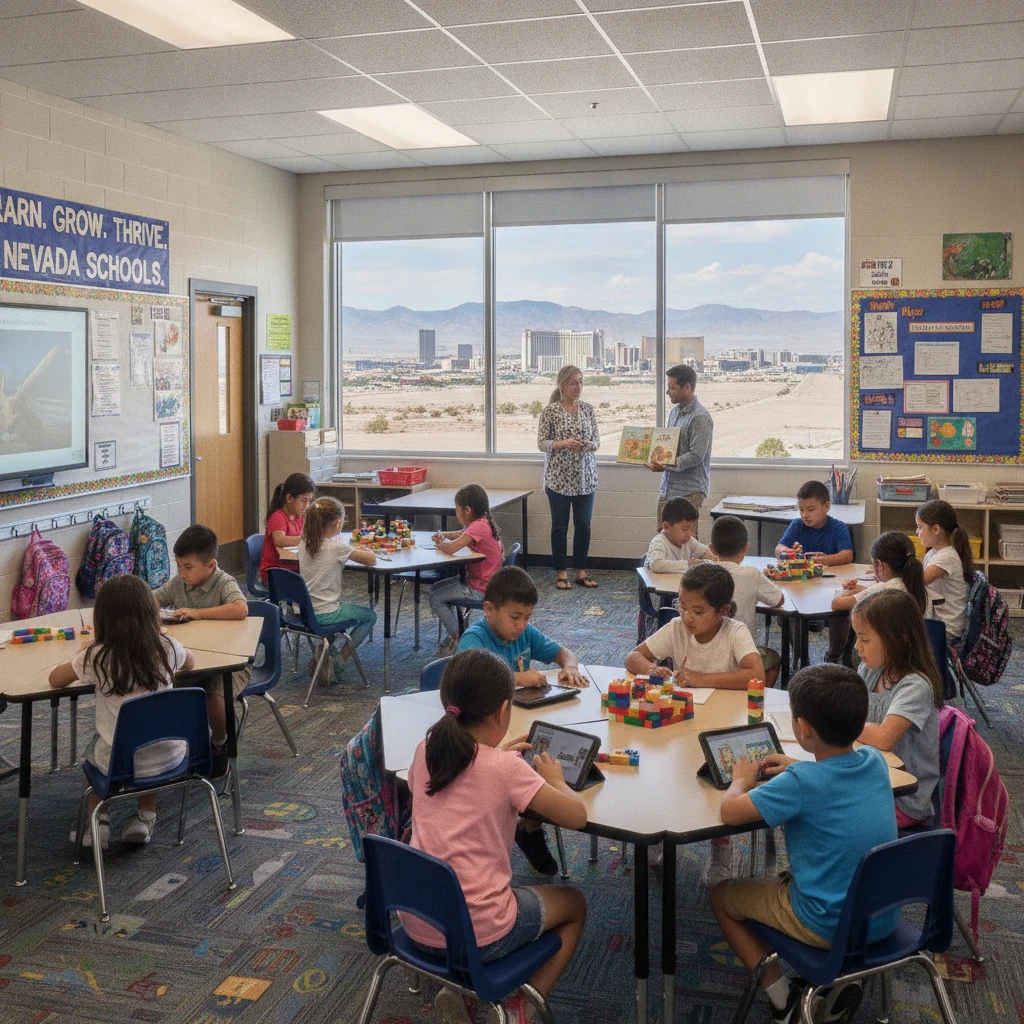
Nevada’s K–12 public schools are working through a demanding mix of policy changes and longstanding pressures. State leaders have revised funding approaches, expanded attention to early literacy and student support, and debated how to improve achievement, while districts continue to navigate staffing gaps, growth, and uneven access to resources.
For families and educators, the key question is how these decisions reach classrooms. A law or state initiative sets direction; its effect depends on funding, staffing, local implementation, and whether schools can meet students’ needs.
How Nevada’s education system is structured
Nevada’s K–12 public education system is overseen at the state level and delivered locally through school districts and charter schools. The Nevada Department of Education administers statewide programs and accountability, while the Nevada State Board of Education sets policy and standards within its authority.
The Nevada Legislature passes education laws and approves state budgets. The Department of Education translates those requirements into guidance, regulations, and program administration. Local school districts then make many day-to-day decisions about staffing, school operations, and services, subject to state and federal rules.
Nevada also has public charter schools, which operate under approved charters and public oversight. They are part of the public education landscape, but their governance and operations differ from district-run schools. Families comparing options should look at each school’s program, enrollment process, transportation, student supports, and results rather than assume that one model suits every child.
That division of responsibility matters when problems arise. The Legislature may authorize a program, but a district must hire staff and organize services to put it in place. The state’s Department of Education provides information on statewide programs, data, and requirements.
Recent reforms shaping Nevada schools
Recent Nevada education reforms have focused on how schools are funded, how early learning and literacy are supported, and how student needs are identified. The precise status and local reach of any initiative can vary, so families should distinguish enacted requirements from proposals and pilot programs.
One major structural change is the state’s transition to the Pupil-Centered Funding Plan, which replaced Nevada’s prior school funding model. The plan is designed to allocate funding based on students and their needs, including additional weights for certain student groups. Its effects depend on annual appropriations, enrollment, and how money is distributed and used locally; a weighted formula does not automatically guarantee that every school receives enough to cover its costs.
State and local efforts have also emphasized early literacy, intervention for students who are behind, and support for English learners. These approaches can include screening, targeted instruction, and additional services. The practical test is whether schools have trained educators, appropriate materials, and time to act on assessment results.
The Nevada Legislature continues to consider bills affecting teacher pipelines, school safety, student services, and accountability. A bill’s introduction or passage by one chamber does not make it law. Readers should check final enactment, funding provisions, and implementation dates before treating a proposal as a statewide change.
Funding, resources, and school needs
Nevada school funding combines state, local, and federal resources, with the state formula playing a central role in distributing support among districts. What a school can provide depends on both the formula and the costs it faces, including staffing, facilities, transportation, and student services.
The pupil-centered approach aims to recognize differences in student need, including the added support some English learners and students from low-income households may require. However, the funding formula is only one part of the picture. Enrollment shifts, local costs, and the availability of qualified staff can affect how much support reaches a classroom and how quickly a school can use it.
Funding and capacity are connected: an allocation does not immediately create a reading specialist, counselor, or fully staffed classroom. Hiring takes time, and rural communities may face a smaller pool of candidates and longer distances between services. Fast-growing areas, meanwhile, must address crowding, construction, and the demands of new enrollment.
For families trying to understand a local change, useful questions include: Is the funding one-time or ongoing? Which student need is it intended to address? How many staff positions or service hours will it support? District budgets and board materials can help show whether a state-level decision has become a practical school resource.
Teacher shortages and classroom pressures
Teacher recruitment and retention remain major challenges for Nevada schools, especially when districts need to fill specialized roles or keep pace with enrollment. Vacancies can lead to larger workloads for existing staff, reliance on substitutes, or delays in providing individual support.
Shortages do not affect every district or subject in the same way. Schools may struggle to recruit teachers in special education, bilingual services, or hard-to-staff locations. Housing costs, workload, access to mentoring, salary competition, and the availability of qualified candidates can all shape whether educators stay.
State and district strategies include alternative pathways into teaching, incentives, grow-your-own programs, and efforts to strengthen preparation and mentoring. Each has trade-offs. Alternative routes can bring candidates into classrooms more quickly, but new teachers still need training and ongoing support. Incentives may help a district fill a position, yet may not solve the underlying workload or retention issues.
Families can look beyond a district-wide vacancy number. Ask whether a child’s classes have permanent teachers, whether support staff are available, and how the school handles long-term absences. Those details offer a clearer picture of how staffing pressures affect the daily experience of students.
Student outcomes and gaps in opportunity
Nevada’s student achievement picture includes progress in some areas and persistent differences in outcomes among schools and student groups. Statewide averages can describe broad patterns, but they cannot show whether a particular student has access to effective instruction and needed support.
Achievement is shaped by more than classroom instruction. Attendance, early learning, language access, family circumstances, school stability, and access to specialists can influence how students perform. English learners may need both grade-level content and focused language development; students with disabilities may require services and accommodations defined in their plans.
Data need context. Test scores and graduation rates can help identify where additional attention is needed, but they do not explain the cause of a gap by themselves. Families and policymakers should consider multiple measures, including attendance, course access, literacy growth, student support, and whether results differ by income, language status, disability, or geography.
For parents, a practical next step is to ask the school how it identifies students who are falling behind, what intervention follows, and how progress is shared. For policymakers, the challenge is ensuring that accountability leads to useful support rather than simply adding reporting requirements to already stretched schools.
What comes next for Nevada education
The next phase of Nevada education reform will depend on implementation: whether funding reaches intended students, schools can recruit and retain staff, and programs produce measurable improvements. Families should watch state budget decisions, Nevada Legislature actions, and local district plans alongside published student data.
Several questions deserve close attention:
- Funding: Are allocations keeping pace with enrollment and the cost of delivering services?
- Staffing: Are recruitment programs filling vacancies and helping teachers remain in the profession?
- Student support: Can schools provide timely literacy intervention, language services, and counseling?
- Accountability: Are state measures helping schools identify needs and improve instruction?
- Access: Do district and charter school students have clear information about enrollment, transportation, and support services?
One common mistake is to judge a reform by its announcement alone. A more reliable check is to follow the chain from law to budget, from budget to staffing and services, and from services to student outcomes. That takes time, and results may differ across communities. Nevada’s progress will be clearest when public reporting shows not only what the state funded, but what students actually received.
Frequently asked questions
Nevada’s education reforms address funding, instruction, and student support, while implementation and staffing remain central concerns. These brief answers summarize what families and readers should know.
What are the main recent changes to Nevada’s education system?
A major structural change is the Pupil-Centered Funding Plan, which replaced the previous state funding model and is designed to account for student needs. Other state and local efforts focus on literacy, intervention, and support services. The status of individual proposals should be checked against final legislative action.
What challenges do Nevada public schools face?
Schools face teacher recruitment and retention difficulties, growing enrollment in some communities, facility needs, and uneven access to specialized services. These pressures can affect class sizes, continuity of instruction, and the time students wait for support.
How does school funding work in Nevada?
Funding comes from state, local, and federal sources. Nevada’s state formula distributes support among districts, with additional weights intended to recognize some student needs. Local budgets and staffing capacity influence how those resources become services at a particular school.
How are reforms expected to affect students and teachers?
Reforms are intended to direct resources toward student needs and improve instruction and support. Their actual effects depend on whether schools receive adequate, sustained funding and can hire qualified staff. Families can track local budgets, staffing, and school-level services to see how policy is being put into practice.