How Nevada's Economy Is Reacting to Recent National Policy Changes
Nevada has always played by different rules than the rest of the country. No state income tax, a tourism-driven economy that can spike or crater based on consumer confidence, and a mining sector sitting on some of the most strategically valuable minerals in North America. When Washington shifts course on trade, energy, or federal spending, the ripple effects here look different than they do in Ohio or Georgia. Right now, those ripples are getting harder to ignore.
Nevada's Economic Snapshot — What's at Stake
Nevada's economy is unusually concentrated in a handful of sectors, which makes it both resilient in booms and exposed in downturns. The state's GDP leans heavily on gaming and hospitality, construction, mining, and a growing logistics and technology corridor anchored by the Reno-Sparks metro area.
That concentration matters when national policy shifts. A tariff that raises construction costs hits Nevada harder than states with more diversified manufacturing bases. A change in federal land-use rules can unlock or freeze billions in potential mining investment overnight. And because Nevada draws visitors from across the country and internationally, anything that affects disposable income or travel confidence shows up quickly on the Las Vegas Strip and in Reno's convention halls.
The state's unemployment rate has hovered in the 5–6% range through mid-2026, slightly above the national average — a persistent gap that reflects the volatility baked into service-sector employment. That context is essential for understanding why the current wave of federal policy changes is drawing close attention from state economists and business owners alike.
Tariffs and Trade Policy — Impact on Nevada's Supply Chains and Costs
Expanded tariffs on imported goods are pushing up costs for Nevada businesses that depend on materials sourced from overseas, particularly in construction and retail. Steel, aluminum, and electronics components — all subject to recent trade policy adjustments — feed directly into Nevada's two biggest cost drivers: building and hospitality infrastructure.
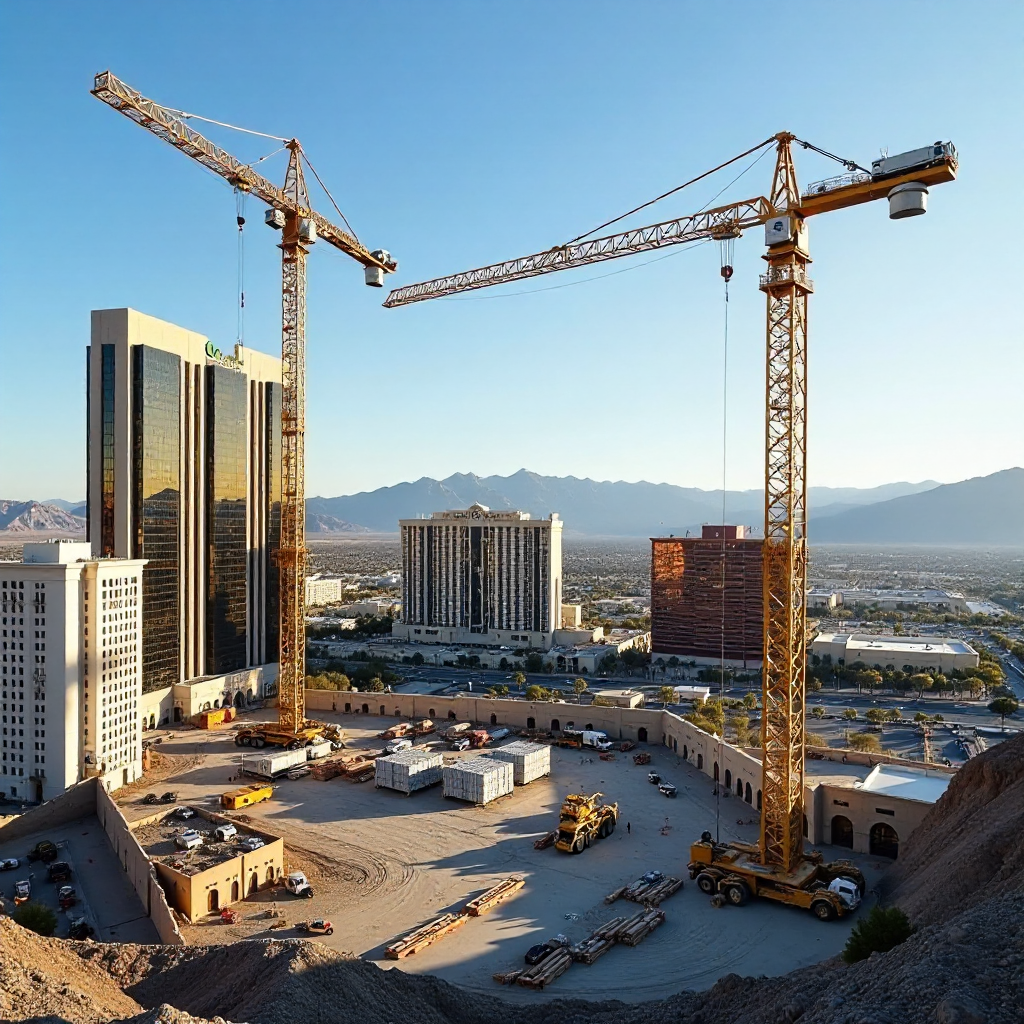
Las Vegas is perpetually under construction. New hotel towers, stadium expansions, and data center buildouts require enormous volumes of imported materials. When tariffs raise the price of structural steel by 15–25%, project budgets stretch, timelines shift, and some developments get shelved. Several contractors in the Clark County area have reported renegotiating supplier contracts or absorbing margin losses to keep bids competitive.
Small businesses feel it differently. A restaurant importing specialty kitchen equipment or a retailer stocking consumer electronics faces the same price increases without the negotiating leverage of a major developer. Supply chain pressure is showing up as a top concern in Nevada small business surveys conducted through the first half of 2026.
There's a counterargument worth acknowledging: some trade restrictions are designed to encourage domestic sourcing, which could benefit Nevada's manufacturing ambitions in the long run. But that transition takes years, and the short-term cost burden is real and immediate for businesses operating today.
The Tourism and Hospitality Sector Under Pressure
Las Vegas tourism is holding up, but the signals are mixed. Visitor volume to the Las Vegas Strip remains strong in absolute terms, but the composition of that spending is shifting in ways that matter to the industry's bottom line.
Consumer confidence nationally has softened in 2026, partly in response to inflation concerns and uncertainty around federal fiscal policy. When households feel financially squeezed, discretionary travel spending — especially the high-margin casino floor and luxury dining revenue that drives Las Vegas profitability — tends to compress before headline visitor numbers drop. Resorts report that average spend per visitor is under more pressure than occupancy rates, which is an early warning sign the industry watches closely.
International tourism adds another layer of complexity. Changes in U.S. visa policy and diplomatic tensions with key source markets have made some international travelers more hesitant. Las Vegas draws significant visitor traffic from Canada, Mexico, and parts of Asia — all markets where bilateral policy friction has created uncertainty. The Nevada Resort Association has flagged this as a developing concern for the second half of 2026.
Reno's economy, while less dependent on gaming than Las Vegas, faces its own version of this pressure through convention and corporate travel. Federal budget tightening that reduces government-funded conferences or limits corporate expense accounts has a direct effect on Reno's hospitality sector, which has worked hard to diversify beyond gaming over the past decade.
Mining, Energy, and the Lithium Opportunity
Nevada sits on the largest known lithium reserves in the United States, and federal energy policy is the single biggest variable determining how quickly that resource gets developed. The current policy environment is genuinely complicated for the sector — pulling in two directions at once.
On one hand, federal support for domestic critical mineral production has accelerated permitting discussions and attracted investment to projects like the Thacker Pass lithium mine in Humboldt County. The strategic logic is straightforward: reducing dependence on foreign lithium supply chains for electric vehicle batteries aligns with both economic and national security goals. Nevada's mining industry has positioned itself as a direct beneficiary of that priority.
On the other hand, changes to federal land management rules and environmental review processes have created uncertainty for some projects. Mining on federal land — which covers roughly 85% of Nevada's total area — requires navigating a regulatory framework that shifts with each administration. Permitting timelines remain one of the most cited obstacles by mining executives operating in the state.
Gold and silver mining, Nevada's more established extractive industries, are less directly tied to energy policy but remain sensitive to federal royalty structures and environmental compliance costs. Any significant changes to those frameworks reverberate through communities in Elko, Battle Mountain, and Winnemucca that depend on mining employment.
Housing, Inflation, and the Cost of Living for Nevadans
Nevada's housing market is under significant strain, and national fiscal and monetary policy signals are making it worse. Home prices in the Las Vegas and Reno metro areas remain elevated relative to local incomes, and mortgage rates — sensitive to federal reserve policy and inflation expectations — have kept affordability out of reach for many first-time buyers.
The state's population grew rapidly during and after the pandemic, driven by migration from California and other high-cost states. That demand surge pushed home prices up sharply, and supply hasn't caught up. Now, with construction costs elevated by tariff-related material price increases and labor shortages in the trades, new housing starts are constrained at exactly the moment more supply is needed.
Renters aren't insulated from these pressures either. Rental costs in Clark County and Washoe County have risen faster than wages for lower-income workers — the same workforce that staffs the hotels, restaurants, and casinos that power the Nevada economy. That dynamic creates a structural vulnerability: the industries Nevada depends on require affordable housing for their employees, and right now that affordability is eroding.
Federal housing assistance programs and infrastructure spending have historically helped buffer these pressures. Uncertainty around the continuation or scaling of those programs adds another variable that state planners are watching carefully.
How Nevada's State Government Is Responding
Nevada's state government has taken a pragmatic, sector-focused approach to the current policy environment rather than a broadly confrontational one. Governor Joe Lombardo's administration has prioritized protecting the state's economic development pipeline while seeking federal partnerships where they're available.
On the economic development front, the Governor's Office of Economic Development has been actively recruiting businesses in logistics, technology, and advanced manufacturing — sectors that can diversify Nevada away from its historical over-reliance on gaming and hospitality. The pitch to companies is familiar: no state income tax, relatively low regulatory burden, and a central location for Western U.S. distribution.
The state legislature has also taken steps to address housing affordability, including measures aimed at streamlining local permitting and encouraging higher-density development in urban corridors. These are long-term solutions to a short-term crisis, but the legislative direction is clear.
On federal funding, Nevada's congressional delegation has been active in advocating for infrastructure dollars and critical mineral investment that align with existing federal priorities. The state secured significant infrastructure funding in recent cycles and is working to ensure that pipeline continues even as federal spending priorities shift. You can track federal infrastructure allocations to Nevada through the U.S. Department of Transportation.
What Comes Next — Outlook for Nevada's Economy
Nevada's near-term economic trajectory depends on a handful of variables that are still in motion. The sectors to watch most closely are tourism resilience, lithium development timelines, and housing affordability — each of which is tied in different ways to decisions being made in Washington.
The optimistic case: lithium investment accelerates, diversification into tech and logistics continues, and Las Vegas tourism stabilizes as consumer confidence recovers. Nevada's structural advantages — the tax environment, the geographic position, the mineral wealth — don't disappear because of a difficult policy cycle.
The cautious case: sustained tariff pressure raises costs faster than wages can adjust, international tourism softens further, and housing affordability continues to squeeze the workforce that the service economy depends on. None of those risks are hypothetical; they're observable trends right now.
What's clear is that Nevada's economic story in 2026 is being written in real time, shaped by decisions at the federal level that the state can influence but not control. For residents, business owners, and workers, staying informed about how these policy changes translate into local conditions is the most practical thing to do. The Bureau of Labor Statistics Nevada data page provides regularly updated labor market figures for those tracking employment trends closely.
Frequently Asked Questions
Is Nevada's economy growing or shrinking in 2026?
Nevada's economy is growing in 2026, but at a slower pace than in the post-pandemic recovery years. GDP growth remains positive, driven by construction, logistics, and mining investment, though the labor market remains slightly softer than the national average.
How do federal tariffs affect everyday Nevadans?
Tariffs raise the cost of imported goods, which feeds into higher prices for construction materials, electronics, and consumer products. For Nevada residents, this shows up most visibly in home construction costs, renovation expenses, and retail prices — adding pressure on top of existing inflation concerns.
Which Nevada industries are most at risk from national policy changes?
Tourism and hospitality face the most immediate risk from shifts in consumer confidence and international travel policy. Construction and small business are most exposed to tariff-related cost increases. Mining faces regulatory uncertainty tied to federal land management and environmental policy.
Is the Las Vegas tourism industry recovering or declining?
Las Vegas tourism is holding steady in visitor volume but facing pressure on per-visitor spending. The industry is in a consolidation phase rather than a clear growth or decline trajectory, with international visitor numbers as the key variable to watch through the rest of 2026.
How is Nevada's lithium mining sector connected to federal energy policy?
Federal energy policy drives lithium demand through electric vehicle incentives and domestic critical mineral priorities. Projects like Thacker Pass depend on federal permitting processes and, indirectly, on the continuation of EV-related policies that sustain demand for lithium-ion battery production.